Alayna: A Designer's Honest Review for Branding
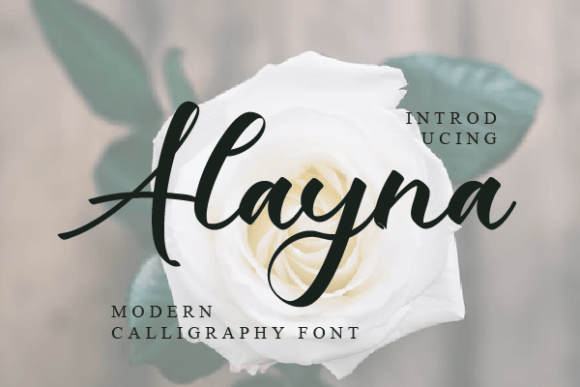
When a new script font lands on my desk, I don't just look at the glyphs; I look for the soul of the typeface. Does it feel manufactured, or does it have the organic irregularity of a human hand? After spending the last week integrating Alayna into several mockups for upcoming client projects, I can confidently say this premium font from Script Amp strikes a rare balance between elegance and approachability. It isn't just another decorative flourish; it is a viable tool for serious brand identity work.
My first impression of Alayna was its fluidity. Unlike many modern scripts that rely on sharp, geometric terminals to appear "clean," Alayna retains a softness in its strokes that feels incredibly inviting. The mood it creates is one of refined warmth. It doesn't scream for attention like a loud display font; instead, it whispers sophistication. This makes it an excellent candidate for brands that want to project trust and intimacy without sacrificing professionalism. The visual personality is distinctly feminine but strong, avoiding the trap of looking overly frilly or childish.
Real-World Performance in Client Projects
The true test of any typeface is how it holds up when pulled out of the specimen sheet and dropped into a real layout. I pushed Alayna through a gauntlet of common design scenarios to see where it shines.
In logo design, Alayna performs exceptionally well. The connections between letters are smooth, reducing the risk of ink traps or digital rendering issues when scaled down. I used it for a boutique skincare line, pairing it with a minimal sans serif font for the tagline. The contrast was immediate and effective; the script provided the luxury feel, while the sans serif grounded the logo in modernity. For packaging design and product labels, the font's weight is substantial enough to remain legible on curved surfaces, a common pain point with thinner scripts.
Moving to print collateral, I tested Alayna on wedding invitations and high-end flyers. Here, the swashes and alternate characters really come into play. They allow for custom ligatures that make each header feel unique, a crucial detail for printable design where personalization is key. In editorial design, using Alayna for pull quotes added a dynamic rhythm to the page, breaking up blocks of body text without disrupting the reading flow.
Digital application is often where scripts fail, but Alayna surprised me. On website headers and blog graphics, the x-height is generous enough to ensure readability on mobile screens. For social media graphics and digital ads, the font renders crisply even at smaller resolutions. I also experimented with it for Canva templates intended for small business owners. Because the letterforms are distinct, non-designers can use Alayna without accidentally creating illegible kerning disasters, making it a safe choice for commercial design assets.
Strategic Limitations and Best Practices
However, no font is a universal solution. There are specific contexts where Alayna should be used with caution. While it excels in large headlines and short phrases, it is not suitable for long paragraphs of body copy. The intricate details that make it beautiful become visual noise when read in bulk. I would strictly avoid using it for instructional text or dense informational content.
For brand marks and decorative accents, Alayna is perfect, but you must be mindful of spacing. When used as a standalone wordmark, give it room to breathe. Crowding it against other elements diminishes its premium feel. In terms of hierarchy, treat Alayna as the "voice" of the brand—use it for the most important emotional hooks, such as the brand name, a primary headline, or a signature quote. Let a neutral serif font or a clean handwritten font style handle the supporting details.
Impact on Readability and Brand Perception
The choice of typography directly influences audience trust and recognition. Alayna contributes to a brand perception of authenticity and care. In a market saturated with generic geometric sans serifs, using a well-crafted script like this signals that a business values aesthetics and detail. This enhances engagement; viewers are more likely to pause on a social post or pick up a package that features typography with character.
Readability is generally high for a script, provided you respect its natural limits. The open counters and clear stroke differentiation help maintain legibility. However, consistency is key. Once you establish Alayna as part of your brand identity, stick to it. Frequent switching between different script styles confuses the audience and dilutes brand recall.
Practical Notes for the Working Designer
Before committing Alayna to a final deliverable, I recommend a few practical steps based on my workflow:
- Test in Monochrome: Always view the font in black and white first. If the weight distribution doesn't work without color, adding a gradient won't fix the underlying structural issues.
- Check Small Sizes: Print a sample at the smallest size it will appear (e.g., on a business card or favicon). Ensure the loops and tails don't fill in or disappear.
- Mockup Reality: Place the text on real-world mockups immediately. Seeing it on a textured paper or a screen bezel reveals how the font interacts with its environment.
- Case Sensitivity: Compare uppercase and lowercase usage. Alayna has a charming lowercase, but the all-caps version offers a different, more formal energy. Choose based on the specific tone needed.
- Font Pairing: Experiment extensively. Try it beside a sturdy serif font for a classic look, a geometric sans serif font for modern contrast, or even another handwritten font for a layered, eclectic vibe. Avoid pairing it with another complex display font as they will compete for attention.
- Licensing Verification: Since this is a commercial font from Script Amp, always double-check the license agreement before using it for client work or digital products meant for resale. Ensure your usage covers the specific medium, whether it's web design, packaging design, or merchandise.
Ultimately, Alayna is a versatile and robust addition to any designer's toolkit. It bridges the gap between artistic expression and commercial viability. Whether you are crafting a creative font lineup for a new agency or designing a single printable design for a craft fair, Alayna delivers the polish and personality required to make a lasting impression. It is a modern typography choice that respects tradition while feeling entirely current.